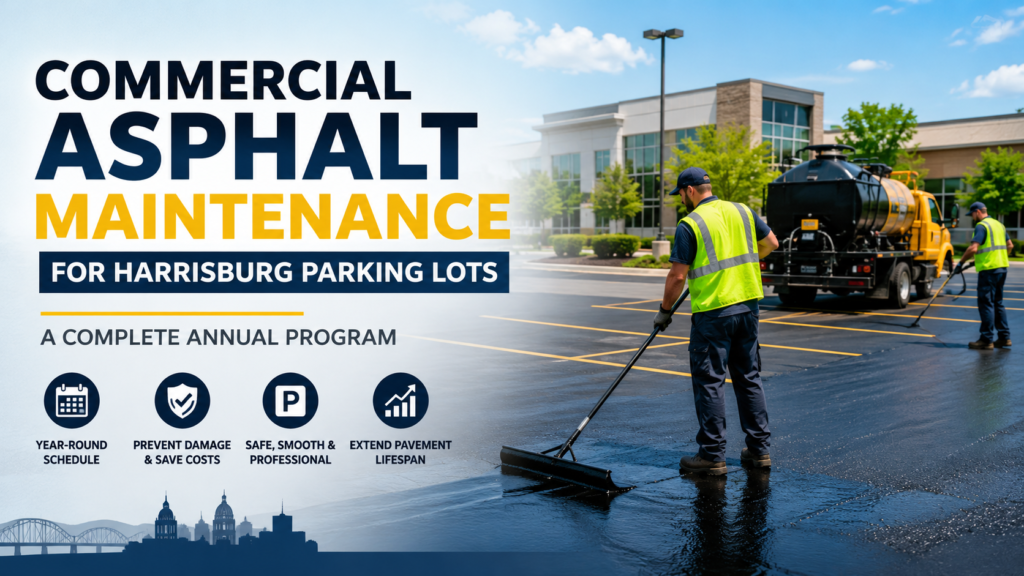
Managing commercial asphalt maintenance in Harrisburg is not a reactive activity not if the goal is to protect the pavement investment and avoid the capital expenditure of premature replacement. Central Pennsylvania climate, with its freeze-thaw cycling, 44 to 46 inches of annual precipitation, hot summers, and road salt exposure, places continuous demands on every commercial parking lot in the city. Property managers who approach this environment with a structured annual maintenance program consistently outperform those who respond only when failures become visible. Understanding what a complete Commercial Asphalt Maintenance Harrisburg maintenance program looks like and why each element is included is the foundation of effective pavement asset management in the Harrisburg market.
The Annual Maintenance Calendar
- Spring (April-May) Condition Assessment and Damage Inventory: After winter, the full extent of freeze-thaw damage becomes visible as temperatures stabilize. This is the time for a comprehensive walk-through cataloging all cracks by type and severity, documenting pothole locations, assessing drainage function, and evaluating edge conditions. This assessment establishes the maintenance scope for the season.
- Spring to Early Summer (May-June) Pothole Repair and Structural Patching: Full-depth pothole repair using properly prepared excavation, base replacement, and hot mix asphalt should be completed early in the warm season, providing time for new patches to cure adequately before the following winter cycle stresses them.
- Summer (June-August) Crack Sealing: Surface cracks are sealed with hot-pour rubberized asphalt sealant during the warmest, driest period of the year. Warm, dry conditions ensure optimal penetration and adhesion of the sealant material. Research indicates that every dollar spent on timely crack sealing saves four to six dollars in structural rehabilitation costs by preventing water infiltration during freeze-thaw cycles.
- Late Summer to Early Fall (August-October) Sealcoating: Sealcoating requires consistent temperatures above 50 degrees Fahrenheit and dry conditions. The August through October window is ideal in Harrisburg. Sealcoating applied at this time enters the winter season fully cured, protecting the asphalt surface from freeze-thaw cycling, road salt, and winter moisture.
- Fall (After Sealcoating) Restriping: Sealcoating covers all existing line markings, which must be reapplied after curing. Restriping ensures ADA accessible spaces are correctly marked, fire lane designations are visible, and the lot presents a clean, professional appearance.
- Pre-Winter (November) Final Inspection and Spot Repairs: Before temperatures drop consistently below 50 degrees and the hot-mix paving season closes, a final check of all repaired areas and cold-patch fill of any new potholes prepares the lot for winter.
ADA Compliance as Part of the Maintenance Program
Every restriping project on a Harrisburg commercial parking lot is an opportunity and legal obligation to review and address ADA accessible parking compliance. Any time a commercial parking facility is resurfaced or restriped, current ADA standards for the number, dimensions, slope, and signage of accessible spaces must be met. Property managers who integrate this review into their standard restriping scope avoid ADA enforcement actions and ensure their facilities provide genuinely accessible parking.
Documentation and Pavement Management Planning
Commercial property managers in Harrisburg who maintain records of their pavement maintenance program what was done, when, to what scope, and by whom have a powerful tool for capital planning and contractor accountability. Annual pavement condition ratings, maintenance records, and photographic documentation create the data foundation for projecting resurfacing timelines, budgeting reserve funds accurately, and evaluating contractor performance over time.
Conclusion
A complete commercial asphalt maintenance program for Harrisburg parking lots is structured around the Pennsylvania climate calendar: spring condition assessment and pothole repair, summer crack sealing during optimal dry conditions, fall sealcoating and restriping before winter, and pre-winter spot repairs before the hot-mix season closes. Each element serves a specific protective function in the annual deterioration cycle that Central Pennsylvania climate creates. Property managers who execute this program consistently protect their commercial pavement assets, extend lot service life by years over reactive management approaches, and avoid the capital emergency of premature replacement.