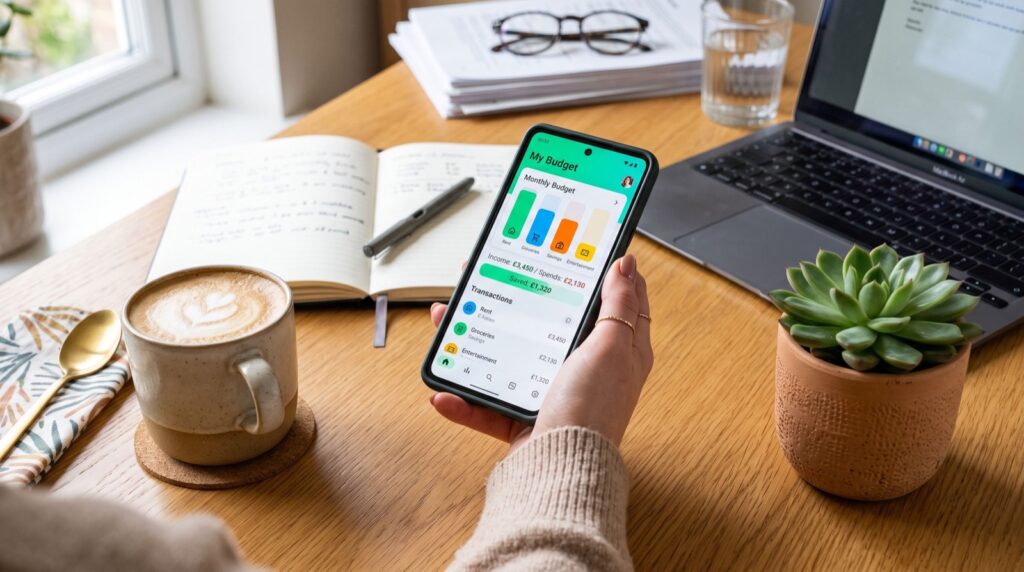
Managing money on your phone has gone from a nice-to-have to a daily habit for most Americans. The best money apps in 2026 help you budget, save, invest, and track spending in one tidy place, so your paycheck actually stretches further.
If you have ever wondered why your balance disappears before the end of the month, the answer usually lives in the details. In this guide, we break down which types of apps solve which problems and how to build a simple stack that fits your real life.
Why Money Apps Matter More Than Ever in 2026
Paper budgets and mental math rarely survive a busy week. A good app watches every transaction automatically, then shows you patterns you would otherwise miss.
The rise of open banking means your accounts, cards, and bills can finally talk to each other. That connection turns scattered numbers into a clear picture you can act on in seconds.
What the Right App Actually Does for You
Think of these tools as a personal finance dashboard. They automate the boring parts so you can focus on decisions that move the needle.
- Categorize spending so you see where cash really goes.
- Alert you before a bill overdraws your checking account.
- Round up purchases and funnel spare change into savings.
- Track subscriptions and flag the ones you forgot about.
- Show your net worth trend over months, not just today.
The Main Categories of Money Apps
No single app does everything perfectly. The smartest approach is to pick one strong tool per job and let them work together.
Budgeting and Spending Trackers
Budgeting apps connect to your accounts and sort transactions into categories. Zero-based tools ask you to assign every dollar a purpose, while flexible trackers simply show trends and let you adjust as you go.
For anyone starting out, a solid roundup of money apps can save hours of trial and error. Reading reviews first helps you avoid tools that hide key features behind steep monthly fees.
Saving and Round-Up Apps
Automatic savings apps move small amounts you barely notice. Over a year, those micro-transfers can quietly build a healthy emergency cushion.
Look for apps that let you set custom rules, such as saving a fixed amount each payday or sweeping any balance over a threshold into a high-yield account.
Cash-Back and Rewards Apps
Cash-back platforms return a slice of what you already spend. Stack them with a rewards card and you effectively get paid twice on the same purchase.
How Do You Choose the Best Money App for Your Needs?
The best pick depends on your goals, not on which app has the flashiest ads. Ask yourself whether you need discipline, automation, or insight, then match the tool to that need.
Use the quick comparison below to see which category fits common financial goals in 2026.
| App Type | Best For | Typical Cost |
|---|---|---|
| Budget tracker | Seeing where money goes | Free to $15/mo |
| Auto-save app | Building an emergency fund | Free to $5/mo |
| Cash-back app | Earning on everyday spending | Free |
| Investing app | Growing long-term wealth | Free to 0.25% AUM |
Before you commit, check how each app protects your data. The Consumer Financial Protection Bureau recommends reviewing privacy policies and confirming that any linked accounts use bank-level encryption.
Features Worth Prioritizing
- Read-only bank connections that cannot move your funds.
- Clear, honest pricing with no surprise upgrade walls.
- Custom alerts for low balances and unusual charges.
- Exportable reports so you own your own numbers.
Building a Simple Money App Stack
You do not need ten apps cluttering your screen. Two or three well-chosen tools usually cover budgeting, saving, and rewards without overwhelming you.
Start with one tracker to understand your spending. Add an auto-save app once you spot room in your budget, then layer in cash-back for the purchases you cannot avoid.
Pairing these habits with practical personal finance tips turns raw data into steady progress. Small, consistent moves beat dramatic one-time changes almost every time.
If you sell services or run a side hustle, choosing quality service providers for payments and bookkeeping keeps your personal and business money cleanly separated.
A Realistic 30-Day Rollout
Adopting every feature at once is a fast track to abandoning the whole system. Instead, phase your setup so each new habit has time to stick before you add the next one.
In week one, link your primary checking account and let the tracker gather data without judging it. In week two, review the categories and rename anything the app guessed wrong. By week three, you will spot one or two spending leaks worth fixing immediately.
Week four is when automation earns its keep. Turn on a modest payday transfer, set a low-balance alert, and enable round-ups. These three switches quietly reshape your finances while you barely lift a finger.
Common Mistakes First-Timers Make
Many newcomers download a pile of apps, connect everything, then feel overwhelmed and quit within a week. A leaner stack sidesteps that burnout entirely.
Others chase sign-up bonuses without reading the fine print. A small bonus rarely outweighs recurring fees or a clunky interface you will fight with for months, so weigh the long-term experience over the short-term perk.
Frequently Asked Questions
Are money apps safe to link to my bank account?
Reputable apps use encrypted, read-only connections that let them view transactions without moving funds. Always confirm the app supports two-factor authentication and check that it is transparent about how your data is stored.
Do I have to pay for a good budgeting app?
Many strong budgeting and cash-back apps are completely free, funded by rewards partnerships or optional premium tiers. Paid plans add features like custom categories and advanced reports, but a free tool is plenty for most beginners.
How many money apps should I actually use?
Two or three is the sweet spot for most people. One budget tracker, one savings tool, and one rewards app cover the essentials without creating login fatigue or fragmented data.
Can money apps really help me save more?
Yes, because automation removes willpower from the equation. Round-up transfers and scheduled savings quietly grow your balance in the background, and spending alerts help you catch overspending before it snowballs.
Start Managing Your Money Smarter Today
The best money apps in 2026 do the heavy lifting so you can focus on your goals instead of your spreadsheet. Pick one tool per job, keep your stack simple, and review your numbers weekly. Explore trusted money apps today and take the first step toward a calmer, more confident financial life this year.