Saudi Arabia’s climate is unforgiving on stored goods. Summer temperatures regularly push past 45°C, and that heat quietly destroys everything from medicines and cosmetics to electronics, artwork, and fresh produce. The wrong storage environment does not just risk spoilage; it can wipe out an entire consignment before it ever reaches a customer.
This is why climate-controlled storage has moved from a luxury to a necessity for businesses and households alike in 2026. But climate control is not one setting. Choosing between chilled storage and ambient storage, or knowing when you need something colder, is the difference between goods that arrive perfect and stock you have to write off. This guide clears up the confusion.
What Is Climate-Controlled Storage?
Climate-controlled storage means a facility actively manages temperature, and often humidity, to keep goods within a defined safe range. Rather than leaving stock at the mercy of the outdoor weather, the space holds a steady environment day and night, all year round.
That stability matters more than most people realise. Repeated swings between hot days and cooler nights cause condensation, warping, and chemical breakdown. A controlled environment removes those cycles, so sensitive products stay in the same condition they were in on the day they arrived.
Chilled vs Ambient Storage: What Is the Difference?
The two most common climate options are chilled and ambient. They serve very different products, and confusing them is a costly mistake. The comparison below shows how they stack up across the factors that matter most.
| Factor | Chilled Storage | Ambient Storage |
|---|---|---|
| Temperature range | Roughly 0°C to 8°C | Controlled room temperature, often 15°C to 25°C |
| Humidity control | Tightly managed | Managed to prevent damp and heat damage |
| Best for | Fresh produce, dairy, pharma, cosmetics | Packaged goods, electronics, documents, textiles |
| Running cost | Higher, due to active cooling | Lower, more energy efficient |
| Typical use | Perishables and temperature-sensitive stock | Shelf-stable goods needing heat protection |
When Should You Choose Chilled Storage?
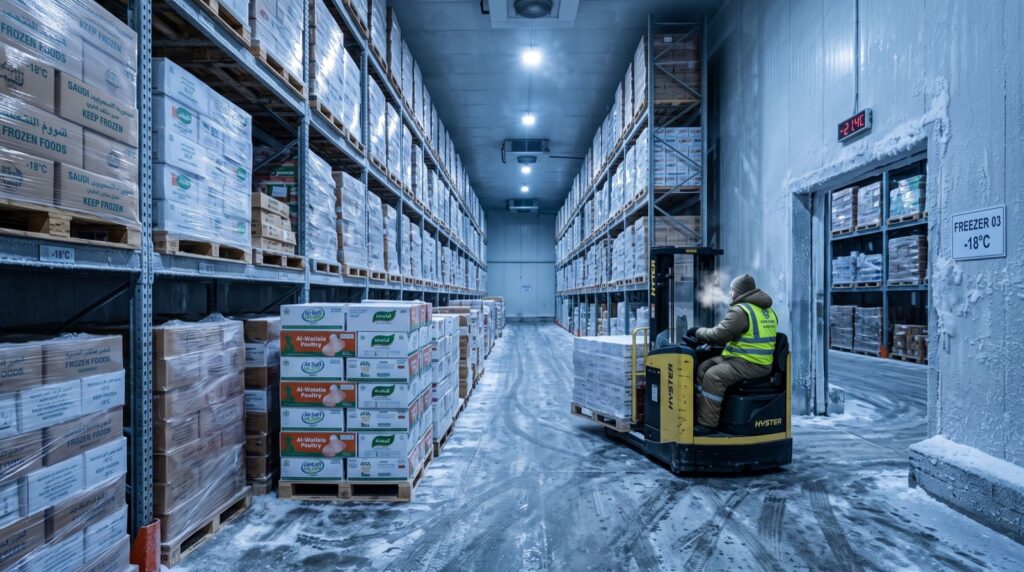
Choose chilled storage when your goods spoil, degrade, or lose potency above a certain temperature. Fresh food is the obvious case, but it is far from the only one. Many pharmaceuticals, vaccines, cosmetics, and even some adhesives and chemicals require a cool, stable environment to stay effective.
For businesses in the capital handling perishables or temperature-sensitive stock, dedicated Chilled Storage in Riyadh maintains that critical cool range without the swings a standard warehouse would suffer. It protects both product integrity and, in regulated sectors, legal compliance.
When Ambient Storage Is the Smarter Choice
Not everything needs to be cold. Cooling goods that do not require it just burns money and, in some cases, introduces unwanted condensation. Ambient storage keeps items at a controlled room temperature, shielded from Saudi Arabia’s extreme heat, without the cost of refrigeration.
This is ideal for the vast middle ground of goods that are heat-sensitive but not perishable. Think electronics, packaged food, furniture, textiles, documents, and general retail inventory. Reliable Ambient Storage In Riyadh gives these products a stable, moderate environment that prevents warping, fading, and heat damage at a far lower running cost than chilled space.
- Electronics: heat degrades batteries and components over time.
- Documents and books: humidity and heat cause yellowing and mould.
- Furniture and wood: temperature swings crack finishes and warp joints.
- Cosmetics and packaged goods: stability preserves shelf life and appearance.
How to Decide Which Storage Type You Need
Matching goods to the right environment is a simple process once you know the questions to ask. Work through these steps before you book any unit.
- Check the manufacturer’s recommended storage temperature for each product.
- Identify whether the item is perishable or simply heat-sensitive.
- Estimate how long you need to store it, since longer terms raise the stakes.
- Weigh the cost of chilled space against the value of the goods at risk.
- Ask the facility about temperature monitoring and backup power.
The World Health Organization stresses that consistent temperature control is essential for storing sensitive products such as medicines, and that gaps in the chain are a leading cause of product loss. Its guidance on the cold chain, available through the World Health Organization, is a useful benchmark for anyone storing regulated goods.
Does Humidity Matter as Much as Temperature?
Very often, yes. Two units at the same temperature can produce completely different outcomes if one controls humidity and the other does not. Damp air breeds mould on textiles and documents, corrodes metal, and ruins electronics. When comparing facilities, ask specifically about humidity management, not just the temperature range.
Getting Expert Help With Your Storage Decision
If you are unsure which environment your goods need, do not guess. A short conversation with a specialist can save an entire consignment. The best facilities assess your products, storage duration, and budget before recommending a solution, rather than pushing you toward the most expensive option.
Partnering with an experienced local team that understands Saudi conditions means your stock is matched to the right climate from day one. That expertise pays for itself the first time it prevents a heat-damaged shipment.
Frequently Asked Questions
What is the difference between chilled and ambient storage?
Chilled storage holds goods at roughly 0°C to 8°C for perishables and temperature-sensitive stock, while ambient storage keeps items at a controlled room temperature to protect them from extreme heat without refrigeration. Chilled costs more to run; ambient suits shelf-stable goods.
Do electronics need climate-controlled storage?
Yes, especially in hot climates. Sustained heat degrades batteries, screens, and internal components. Ambient climate-controlled storage protects electronics from Saudi summer temperatures at a lower cost than chilled units, which are usually unnecessary for these items.
Is climate-controlled storage worth the extra cost?
For heat-sensitive or perishable goods, it almost always is. The price difference is small next to the value of a spoiled consignment or ruined stock. Match the level of control to the goods’ sensitivity to get the best value.
How do I know if my goods need chilled storage?
Check the manufacturer’s recommended storage temperature. If the product must stay below about 8°C to remain safe or effective, such as fresh food, dairy, or many pharmaceuticals, it needs chilled storage rather than ambient.
Conclusion: Match the Climate to the Cargo
Climate-controlled storage protects your goods from Saudi Arabia’s punishing heat, but only if you pick the right type. Chilled storage guards perishables and temperature-sensitive stock, while ambient storage shields the wide range of goods that need heat protection without refrigeration. Getting that match right saves money and prevents losses.
Before you store anything valuable this year, check its temperature needs and choose accordingly. If you are still unsure, reach out to a climate-storage specialist who can assess your goods and recommend the ideal environment. A few minutes of advice today protects your stock for every month it stays in storage.